





Hii mate, let me ask you something honest. How many times have you told yourself “okay, just 5 more minutes” on your phone — and then suddenly it is 1 AM? We all do this. Scrolling reels, watching videos, checking messages, replying to that last text. Your eyes feel heavy but your brain is still running. You keep going. And then you finally sleep — but in the morning, you feel tired, heavy, and low energy. Like you didn’t even sleep at all.
This is not a willpower problem. This is a screen problem.
Your phone, laptop, and TV are not made for bedtime. They are designed to keep you awake and engaged. This is why digital detox before sleep is becoming so important today. It simply means — putting your screens away before bed and giving your mind a chance to calm down naturally.
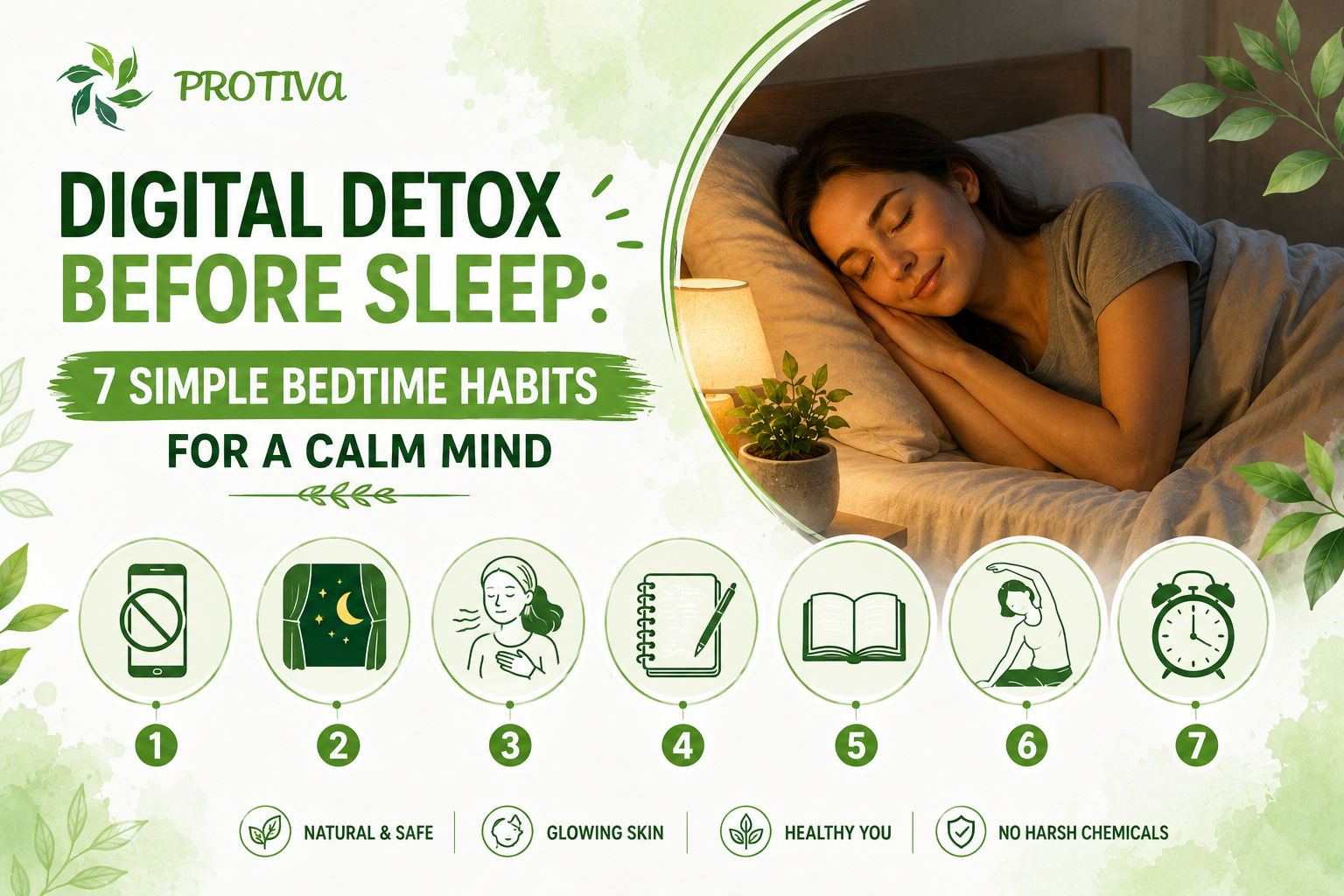
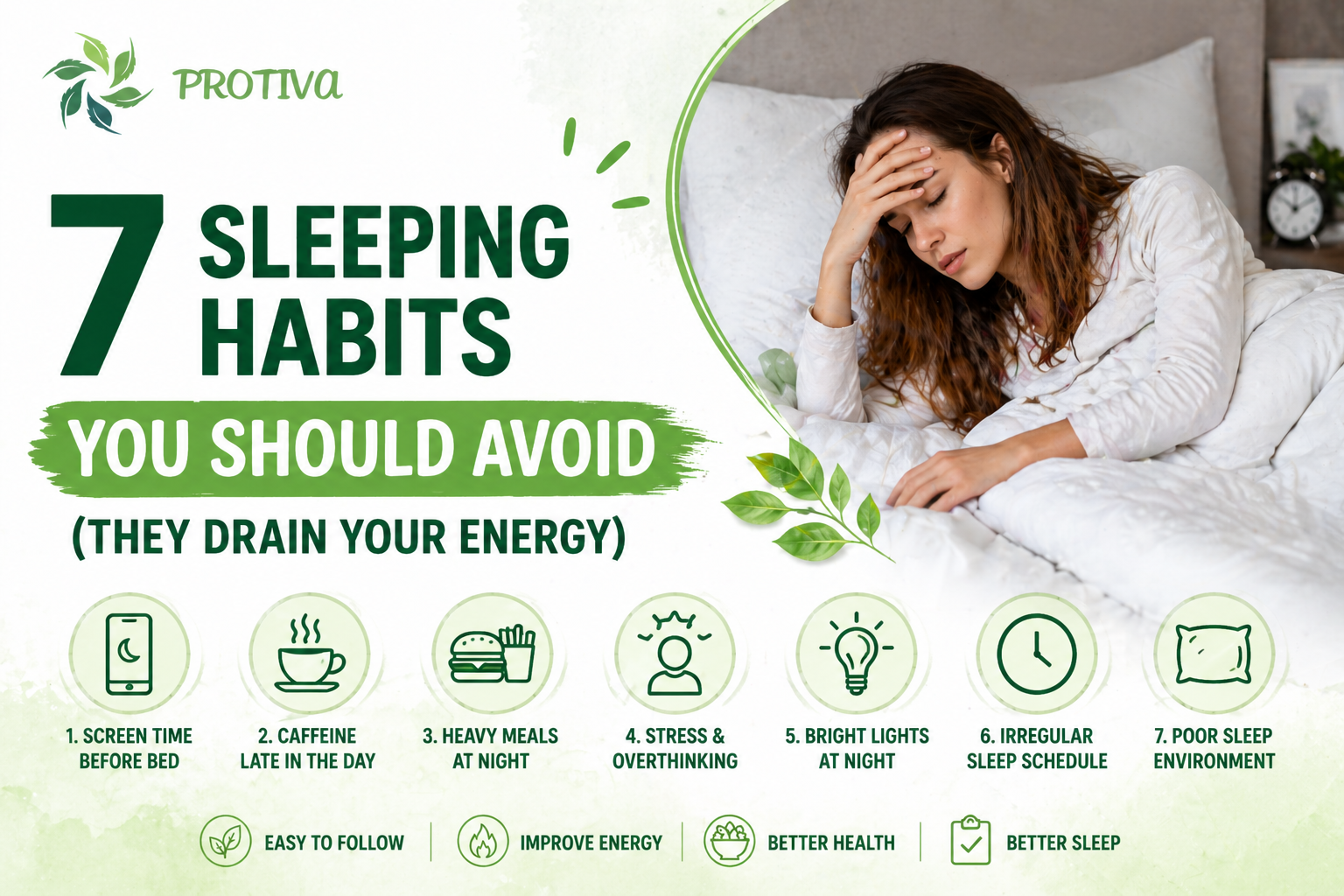
In this blog, you will learn 7 simple bedtime habits for a digital detox that you can start doing from tonight. No complicated rules. No strict schedules. Just small changes that make a big difference. And if you already struggle with sleep, first read this: 7 Sleeping Habits You Should Avoid (They Drain Your Energy) — it will help you understand the full picture.
Let’s start.
Table of Contents
Why Screens Before Bed Are Bad for Your Brain and Sleep?
Before we go into the habits, let us understand one simple thing — why exactly do screens hurt your sleep?
Your brain has a natural sleep system. When the sun goes down and the light gets dim, your brain starts making a hormone called Melatonin. This hormone is your body’s natural sleep signal. It tells your brain and body — “it is time to rest now.” and phone, laptop, and TV screens produce a type of light called Blue Light among which your brain cannot tell the difference between blue light from a screen and actual sunlight.
So when you use your phone at night, your brain thinks it is still daytime. It stops making melatonin. Your sleep signal gets blocked. And your body stays in a “wake up and be alert” mode — even when you are lying in bed with your eyes half-closed.
A study published by the Proceedings of the National Academy of Sciences (PNAS) found that using a light-emitting device before bed delays the body’s internal clock, reduces melatonin levels, and reduces the quality of REM sleep — which is the deep, restful stage of sleep your body needs most.
Another research from Harvard Medical School confirmed that blue light has twice the disrupting effect on melatonin compared to normal light.
Also Scrolling social media, watching exciting videos, reading emotional news — all of these activate your brain’s stress hormones like cortisol and dopamine. Your brain gets stimulated, not relaxed. And then you wonder why you cannot sleep properly.
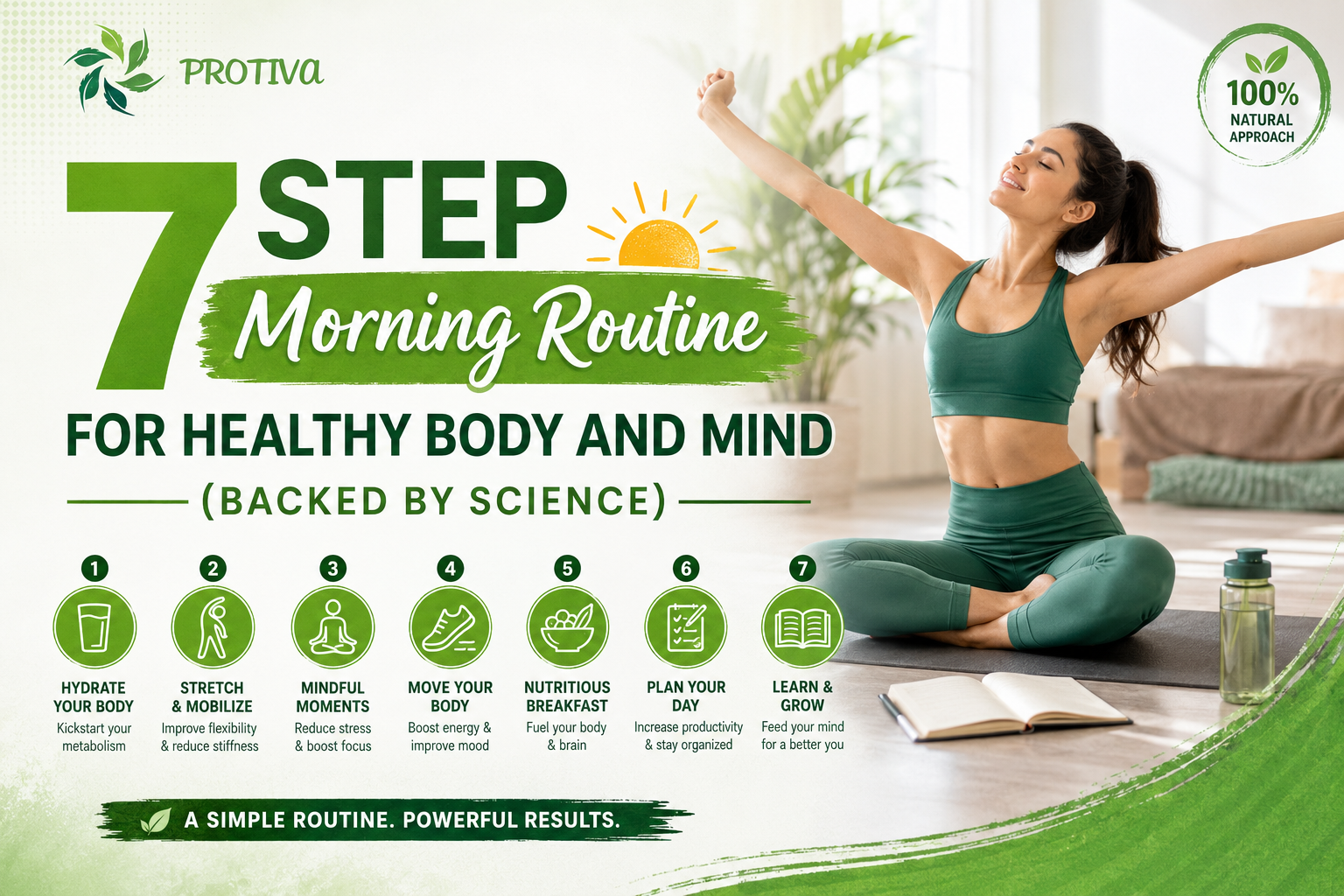
This is also why so many people wake up feeling low energy. If your night is broken, your morning suffers too. You can read more about building a strong start here: 7 Step Morning Routine for Healthy Body and Mind.
Let’s dive it into now:
Habit 1 — Stop Using Your Phone Before Bed
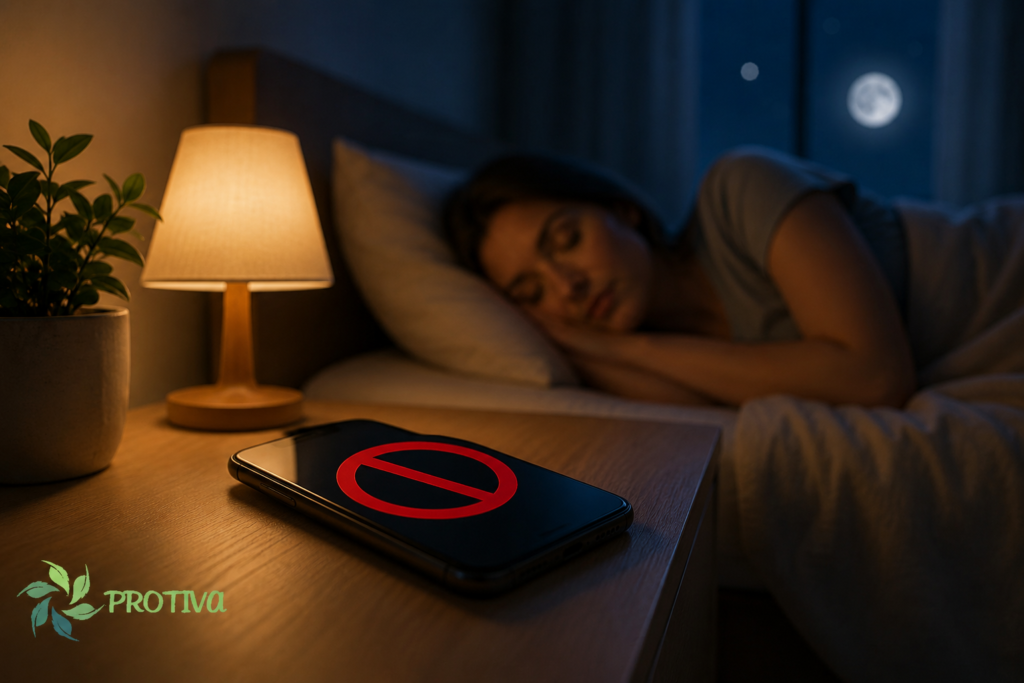
This is the most important habit. And yes, it is also the hardest one for most people. The simple rule is — no screens for at least 60 minutes before your bedtime.
Most experts and sleep researchers suggest a minimum of 30 minutes. But 60 minutes gives your brain more time to wind down and start producing melatonin naturally. The Sutter Health specifically recommends avoiding screens for at least 30 to 60 minutes before bed as part of good sleep hygiene.
Why this is so difficult:
- Social media apps are designed to be addictive. Every scroll gives your brain a small reward. It is very hard to stop.
- Most of us use the phone as our alarm clock — so we keep it right next to us.
- Watching one last video feels harmless. But the brain gets stimulated again and again.
Simple way to do it:
- Set an alarm on your phone for 60 minutes before your sleep time. When it rings — put the phone face-down or in another room.
- Buy a cheap alarm clock so you don’t need your phone next to your bed. This one change alone is very powerful.
- Tell yourself — “my phone will still be there tomorrow morning. Nothing is going to change in 8 hours.”
- If you find it very hard, start with just 20–30 minutes and slowly increase to 60 minutes over a few weeks.
Remember: You are not punishing yourself. You are giving your brain a break it really needs.
Habit 2 — Turn Off Screens and Keep Your Bedroom Dark
Putting your phone away is a great start. But your bedroom also needs to be in the right condition for sleep. That means — dark, cool, and quiet.
Even the small light from a TV on standby, a bright streetlight outside your window, or a night lamp that is too bright can disturb your melatonin levels. Your brain is very sensitive to light at night — even when your eyes are closed.
Research published in the JAMA Internal Medicine journal found that sleeping with any artificial light exposure at night was associated with higher chances of weight gain, poor metabolic health, and disrupted sleep cycles. We also covered this in detail in our post on sleeping habits you should avoid — sleeping in a bright room is one of the most common mistakes people make without even realizing it.
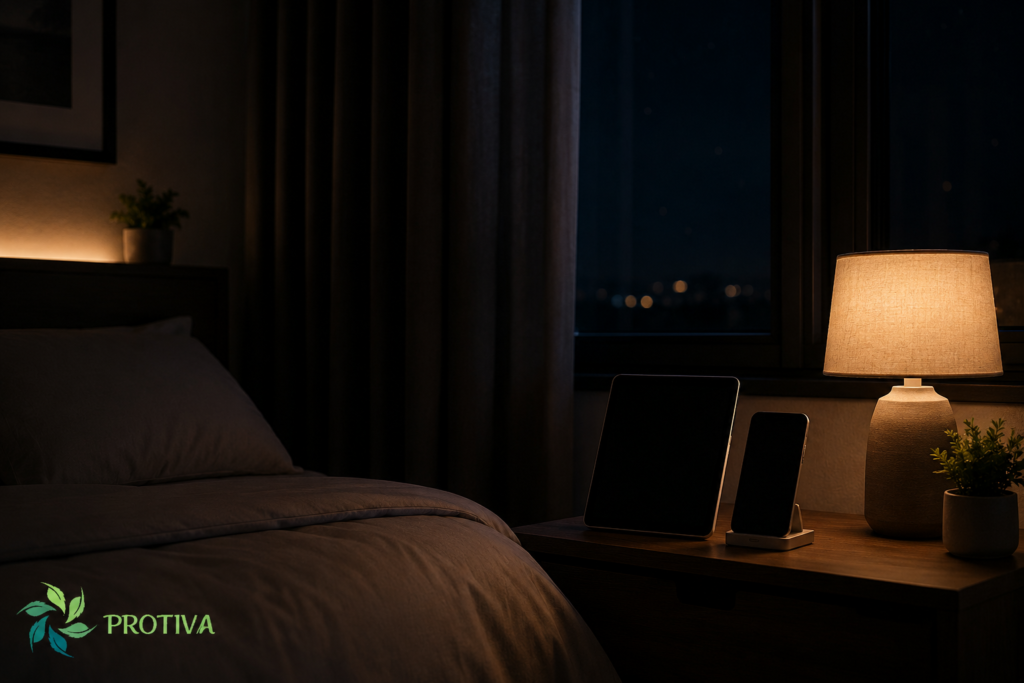
Simple way to do it:
- Turn off the TV completely before sleeping — not just on standby.
- Close all windows or use dark curtains to block outside light.
- Switch off or dim the room lights 30–45 minutes before bed.
- If you need some light, use a very dim warm-tone lamp — not a bright white light.
- Use an eye mask if you cannot fully control the light in your room.
- Keep your phone face-down so the screen notifications don’t flash light at you.
Habit 3 —Practice Deep Breathing to Relax Before Sleep
Most of us go to bed with our minds still running at full speed. Thoughts about tomorrow’s tasks, old conversations, stress about money, problems at work — the brain just keeps going. This is called an overactive nervous system. When your body is in stress mode, your brain stays alert. You cannot fall asleep easily. And even if you do, the sleep is not deep.
The good news is — slow deep breathing is one of the fastest and easiest ways to calm your nervous system. No equipment needed. No experience needed. Just 5 to 10 minutes. A research review published in Frontiers in Psychology found that slow breathing exercises directly reduce the body’s stress response, lower cortisol levels, and activate the parasympathetic nervous system — which is the “rest and digest” mode that prepares your body for sleep.
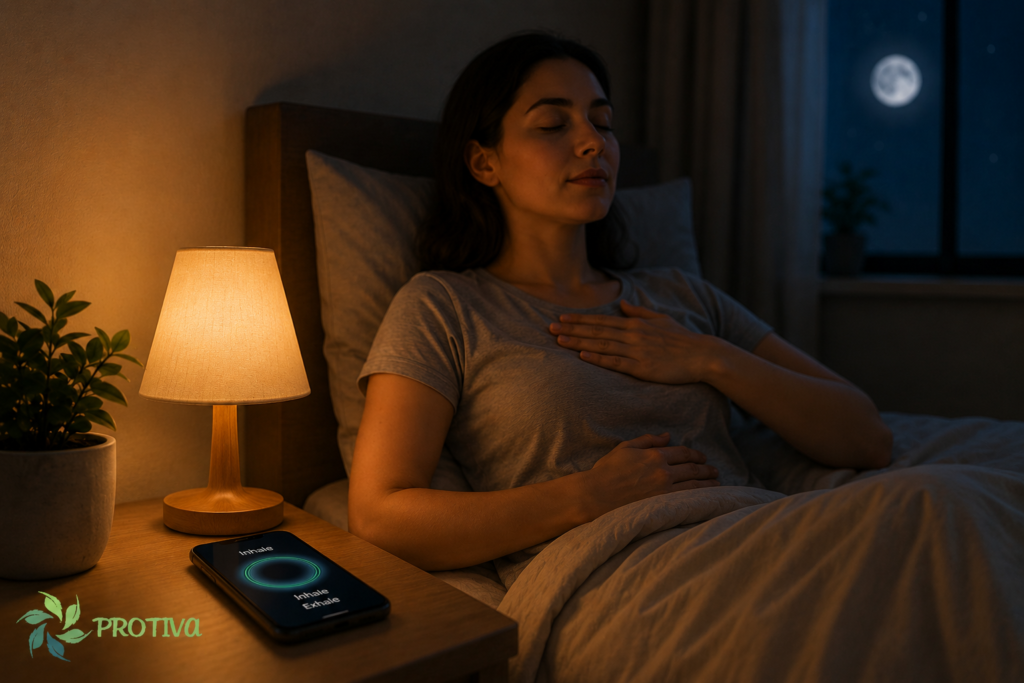
Simple breathing exercise to do before bed (4-7-8 Method) follow along slowly:
- Inhale through your nose…
1… 2… 3… 4 - Hold your breath…
1… 2… 3… 4… 5… 6… 7 - Slowly exhale through your mouth…
1… 2… 3… 4… 5… 6… 7… 8
It feels a little strange at first. But after 2 to 3 days of doing this regularly, you will start to feel noticeably calmer and sleepier after just a few rounds. Breathing exercises are also a great habit to add to your morning routine — doing them both morning and night gives your mind the calmness it needs throughout the whole day.
Habit 4 — Write Down Your Thoughts Before Going to Bed
Have you noticed that most of your overthinking happens in bed? You lie down, close your eyes, and suddenly your brain remembers everything you forgot during the day — pending tasks, tomorrow’s meetings, that awkward thing you said 3 years ago.
This happens because your brain tries to “process” unfinished thoughts when things are quiet. And it chooses bedtime because that is when all the noise and distractions are gone. One very simple way to stop this is — write it down before you get into bed.
A study from Baylor University, published in the Journal of Experimental Psychology, found that people who wrote a to-do list for the next day before going to bed fell asleep significantly faster than those who did not. The brain feels “done” once thoughts are written down — it does not need to keep reminding you.
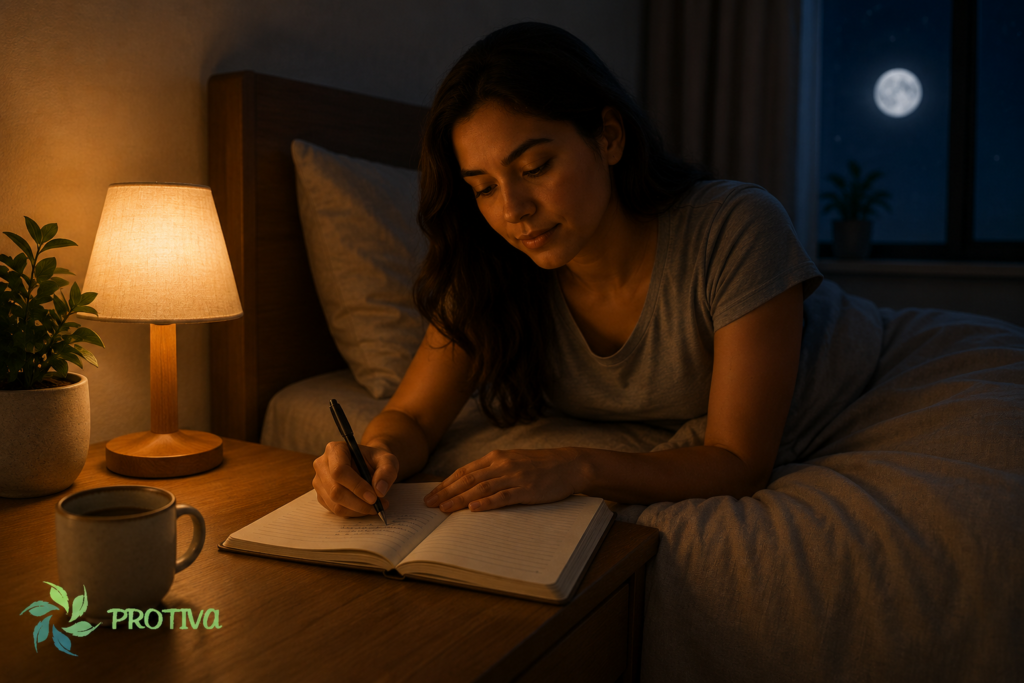
Simple way to do it:
- Keep a small notebook and pen next to your bed.
- Before sleeping, spend just 5 minutes writing down:
- 3 things you need to do tomorrow
- Anything that is bothering you (just writing it down helps)
- One good thing that happened today (this also improves your mood before sleeping)
- Once it is written — close the notebook and tell yourself “I will handle this tomorrow.”
This is a very underrated habit. It is simple, it is free, and it works very well.
Habit 5 — Read a Physical Book Instead of Scrolling Your Phone
Most of us scroll our phones at night just because we want something to do. We feel restless. We need something to occupy our mind before sleep. And the phone is right there. The solution is not to just “stop using your phone” — it is to replace it with something better. And reading a physical book is one of the best replacements you can find.
Reading (from a real book, not a screen) has been shown to reduce stress levels by up to 68% in just 6 minutes — faster than listening to music or going for a walk. This was found in a study by the University of Sussex. Researchers found that reading reduced heart rate and muscle tension very quickly, putting the body in a relaxed state ideal for sleep.
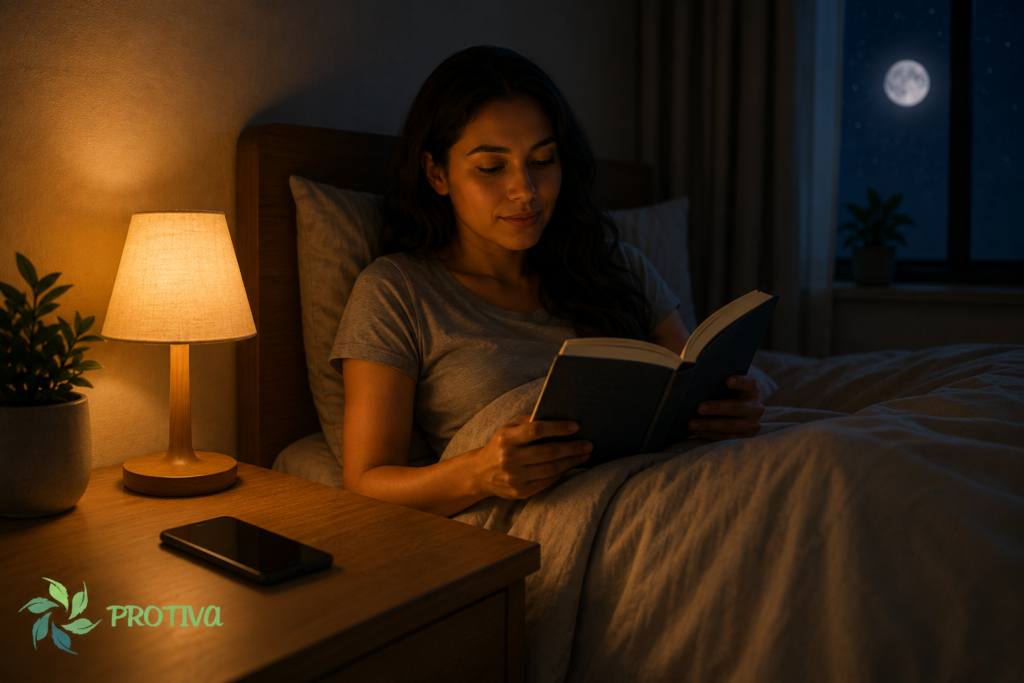
Simple way to do it:
- Pick any book you enjoy — it does not have to be something heavy or educational. Fiction, self-help, stories — anything you like.
- Read for 15–30 minutes before sleeping.
- Use a small dim lamp if the room is dark — but avoid reading from your phone or tablet (even with night mode on, the screen still stimulates your brain).
- Keep the book on your bedside table so it is easy to reach.
After just a few nights of doing this, you will notice that you feel naturally drowsy after reading — and falling asleep becomes easier.
Habit 6 — Do Light Stretching to Relax Your Body Before Sleep
Most of us sit in one position all day — at a desk, in a car, on a couch. By the time night comes, your muscles are tight, your body feels stiff, and your mind is still in “work mode.” This physical tension also keeps your brain from fully relaxing.
Doing 5 to 10 minutes of very gentle stretching before bed helps your body physically switch from active mode to rest mode. It releases muscle tension, lowers your heart rate, and signals to your nervous system that the day is over.
You do not need a full workout for this. In fact, heavy exercise before bed can actually keep you awake. We cover great low-impact movement options in this post: 7 Low-Impact Quiet Home Workouts for Busy Professionals. Some of those movements are perfect for a bedtime wind-down too.
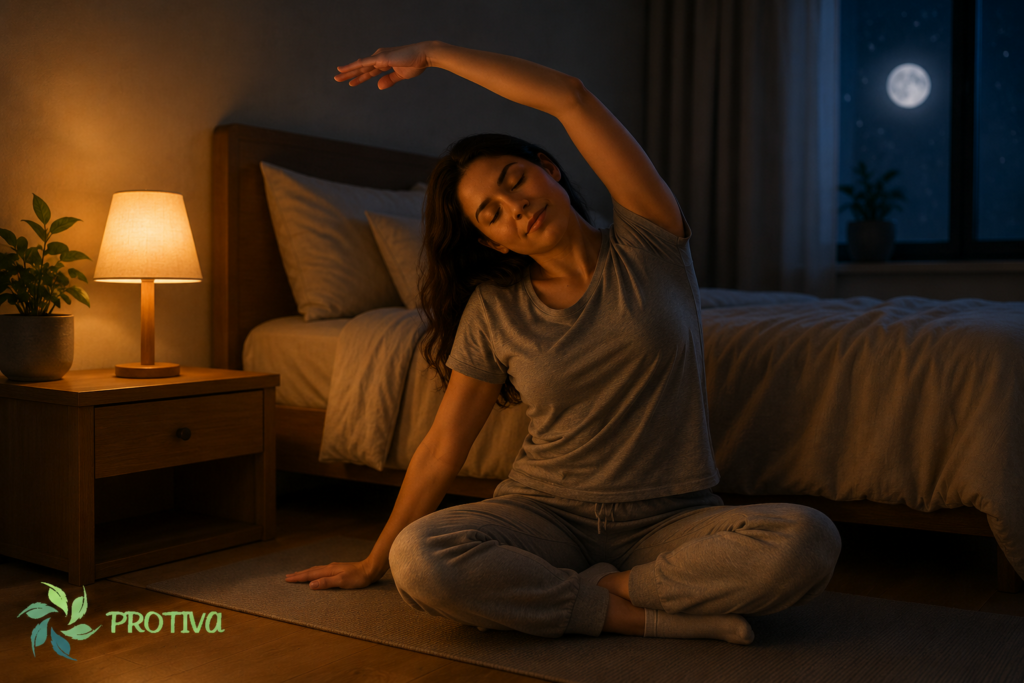
Simple stretches you can do before bed (no equipment needed):
| 🌙 Stretch | 🧘 What To Do | ⏱ Time / Reps | ✨ Benefit |
|---|---|---|---|
| Neck Rolls | Slowly roll your neck left and right while keeping your shoulders relaxed. | 5 times each side | Helps release neck tension and relax your upper body |
| Shoulder Shrugs | Lift your shoulders toward your ears, hold for 2 seconds, then slowly release. | Repeat 5 times | Reduces shoulder stiffness and stress |
| Child’s Pose | Sit on your knees, stretch your arms forward, and rest your chest toward the floor. | Hold for 30 seconds | Calms the nervous system and relaxes the back |
| Lying Knee Hug | Lie on your back and gently hug both knees toward your chest. | Hold for 30 seconds | Helps relax the lower back and hips |
| Seated Forward Fold | Sit with legs straight and slowly reach toward your toes without forcing the stretch. | Hold for 20 seconds | Loosens tight muscles and helps your body unwind |
Do all of these slowly and gently. No rushing. Breathe deeply through each stretch. By the end, you will feel noticeably more relaxed.
Habit 7 — Sleep at the Same Time Every Night
This is the habit that brings everything together. You can do all 6 habits above — but if you sleep at 11 PM one night, 1 AM the next, and 12:30 AM the night after, your body never gets into a proper rhythm. And without a rhythm, your sleep quality stays poor no matter what.
Your body runs on something called the Circadian Rhythm — a 24-hour internal clock that controls when you feel sleepy, when you feel alert, when your digestion works, and when your body repairs itself. This clock depends completely on consistency.
We talked about this in detail in our post about sleeping habits you should avoid — irregular sleep timing is one of the most damaging habits for long-term health.
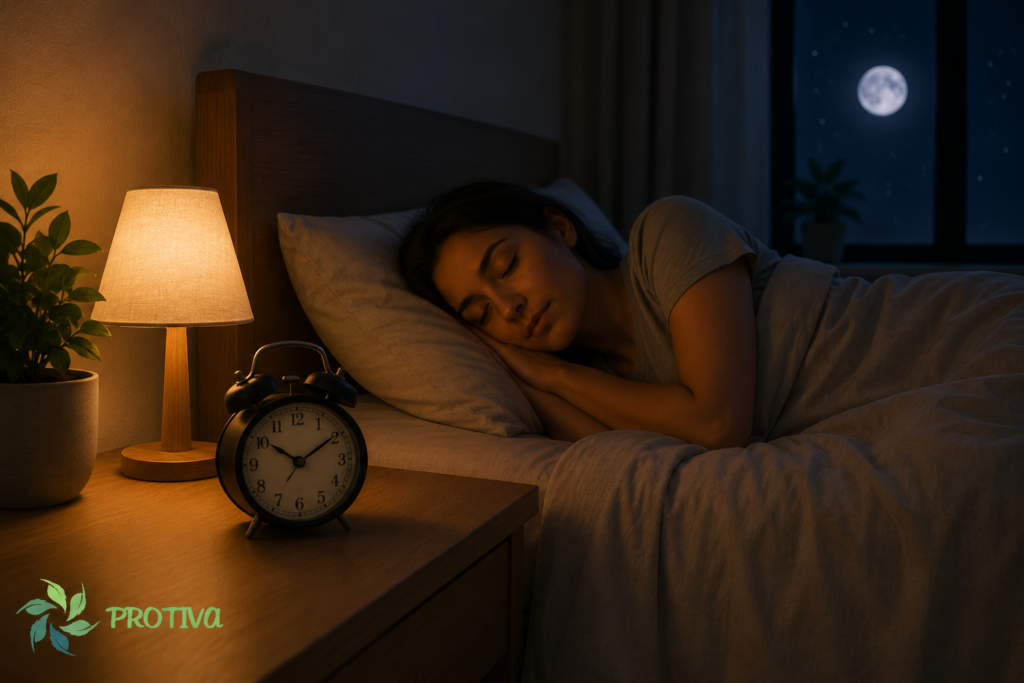
Simple way to do it:
- Pick a sleep time that works for you — and stick to it every day including weekends.
- If you are a night person and cannot sleep at 10 PM — that is okay. Even sleeping at midnight consistently is better than sleeping at random times.
- Set a “bedtime alarm” on your phone 30 minutes before your chosen sleep time. When it rings, start winding down — screens off, lights dim, Choose 1–2 calming actions:
- 🧘 Breathing (4-7-8 method)
- 📖 Light reading
- ✍️ Journaling thoughts
- 🎧 Soft music
- Avoid sleeping in on weekends by more than 30–45 minutes from your regular wake time. Big “catch-up sleep” on weekends actually makes Monday mornings harder, not easier.
Consistency is more powerful than perfection. One week of sleeping and waking at the same time will feel more refreshing than one “perfect” night of 9 hours after weeks of irregular sleep.
How Long Does a Digital Detox Before Bed Take to Work?
This is a very common question. And the honest answer is — most people start noticing a difference within 3 to 7 days.
Here is a rough idea of what you can expect:
- Day 1–3 (Adjustment phase) → Brain resists change, restlessness is normal
- Day 4–7 (Initial improvement) → Sleep starts stabilizing
- Week 2–3 (Recovery & balance) → Major improvement in sleep quality & energy
- Week 4 onward → The habits start to feel natural. Sleep becomes deeper. Energy, focus, and mood all improve noticeably.
And once your sleep improves, your mornings will automatically feel better too. You can pair your new sleep habits with a strong morning routine — read here: 7 Step Morning Routine for Healthy Body and Mind (Backed by Science).
The key thing is consistency. Even if you miss one night — just continue the next day. Don’t quit.
How These Habits Connect to Your Overall Health?
Many people think sleep is separate from fitness, skin, and energy. But actually, everything is connected.
When you sleep poorly — even your skin suffers. Your body does most of its skin repair and collagen production during deep sleep. Poor sleep means dull skin, more breakouts, and slow skin healing. If you are working on your skin, you must also fix your sleep. You can read more about how to care for your skin naturally here: How to Get Clear Skin Naturally at Home (5 Proven Ways).
Also — good hydration before bed (not too much, not too little) supports your body through the night. Learn about the role of water in your overall wellness here: How Water Intake Affects Your Skin: 5 Proven Benefits You Should Know.
FAQs
What is digital detox before sleep?
A digital detox before sleep means to stop the use of all screens — phone, TV, laptop — at least 60 minutes before you go to sleep. This helps your brain to get calm down and produce the sleep hormone melatonin naturally.
What can I do instead of using any screen before bed?
You can read a physical book, do slow breathing exercise, write a journal, do light stretching exercise, listen to calm and soothing music or nature sounds, or simply lie in the dark and let your mind rest. All of these are much better for sleep than watching screen.
How many days does it take to see results?
Most people starts noticing improvements in sleep quality within 3 to 7 days. Major results like Deeper sleep, easier mornings, and better energy typically start showing by week 2 or 3 with consistent practice and patience.
Is it okay to watch TV before bed?
TV has the same blue light issue as in phone or laptop. Also, watching exciting or emotional content keeps your brain stimulated. however, even if you want to watch TV switch it off at least 50-60 min before going to sleep.
Conclusion:
Let’s be honest. We all know that using our phones at night is not good. But knowing it and actually changing and working on it are two different things. The good news is — you don’t have to change everything at once.
Start with just one habit from this list tonight. Maybe put your phone in another room. Maybe do 5 minutes of deep breathing. Maybe write down tomorrow’s tasks before you sleep. Small steps are still steps.
Sleep is not a luxury. It is the foundation of everything — your morning energy, your skin health, your fitness results, your mood, your focus — all of it starts with how well you sleep at night. Give your mind the rest it deserves. Put the screen down. Let your brain breathe.
Goodnight. And sweet dreams — this time for real. 😴


Really enjoyed reading this article! The way Protiva explains fitness in such a practical and motivating way makes it easier for beginners as well as regular fitness enthusiasts to stay consistent. I especially liked how the blog focuses not only on workouts but also on overall wellness, discipline, and healthy lifestyle habits. In today’s busy routine, content like this is genuinely helpful and inspiring. Looking forward to reading more fitness tips, nutrition advice, and workout guides from Protiva. Keep up the amazing work!